
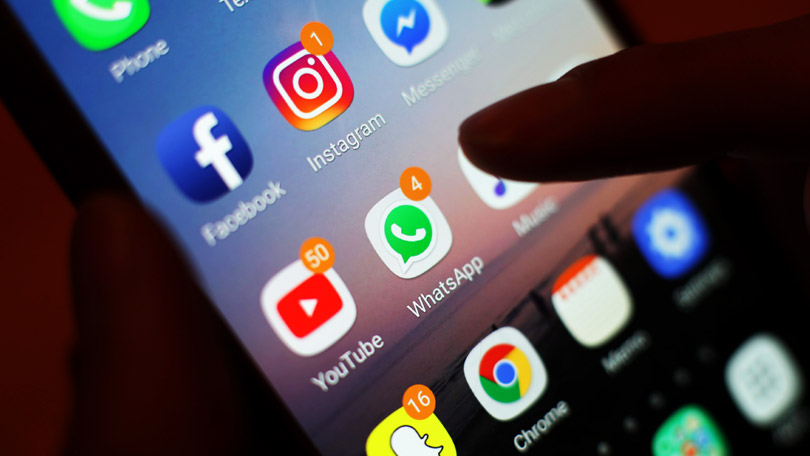
Facebook and its family of services suffered another widespread interruption on Sunday, leaving people around the world unable to refresh social feeds or send messages. Facebook, Instagram, WhatsApp and Messenger were all affected, making the incident the company’s second major multi-service outage in about a month.
Reports began rising shortly after 6:30 a.m. Eastern time on April 14. Facebook’s main website was unavailable for some users, while others could open an app but could not load new posts. Instagram feeds stopped refreshing, WhatsApp messages failed to send or arrive, and Messenger conversations were also disrupted.
A partial but global failure
The impact varied by location rather than taking every account offline at once. Outage reports were concentrated in parts of Europe, Asia and the northeastern United States, while users elsewhere retained limited access. The similar timing across four services made it clear that the problem was not confined to one app or a single mobile platform.
NetBlocks, which monitors internet availability, described a partial global outage and estimated that the affected services were available to roughly 40 percent of users at one point. Its assessment drew on about 30,000 measurements from 2,500 observation points. The organization said the data did not resemble a global routing failure or the latency spike commonly associated with a distributed denial-of-service attack.
With Facebook’s own services unavailable, users moved to Twitter to compare symptoms and post jokes. The hashtags FacebookDown, InstagramDown and WhatsAppDown trended in multiple countries. The migration also demonstrated how much communication, customer support and publishing activity had become concentrated in products controlled by one company.
Service began returning at around 9 a.m. Eastern time, a little more than two hours after the first surge in reports. A Facebook spokesperson said some people had experienced trouble connecting to the company’s family of apps, confirmed that the issue had been resolved and apologized for the inconvenience. The company did not identify the cause of this April outage.
Another incident after March’s record disruption
The timing was particularly uncomfortable because Facebook, Instagram and WhatsApp had suffered a much longer failure on March 13. That disruption persisted for many hours, and Facebook did not give the all-clear until more than a day after problems began. The company later blamed a server configuration change that triggered a cascade of issues and said the incident was not caused by an outside attack.
Sunday’s failure was shorter, but its breadth renewed questions about shared infrastructure. Operating several services can make communications easier across a company, yet a common technical dependency can also allow one fault to affect social networking, photo sharing and private messaging at the same time.
For most users, the immediate result was a frustrating morning without familiar apps. For businesses and organizations that rely on Facebook’s platforms to reach customers, the outage was also a reminder to maintain another contact channel. Facebook restored the services quickly, but offered no technical explanation for why its entire app family had stumbled again.
Recent Comments