
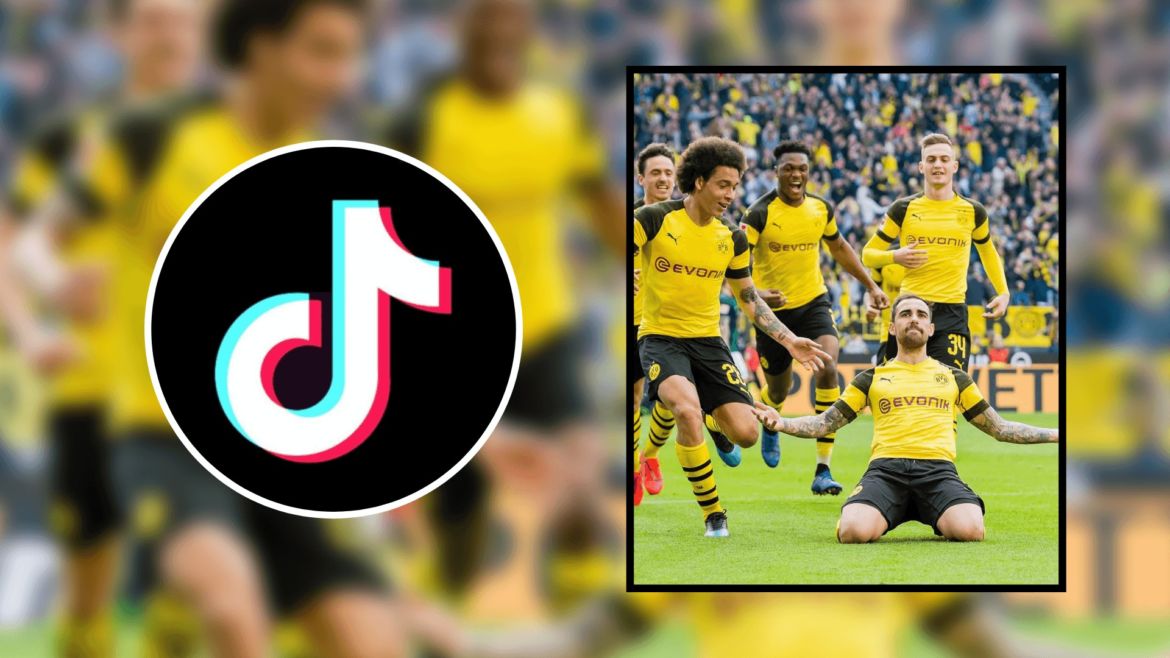
Borussia Dortmund became the first Bundesliga club to establish an official presence on TikTok in April 2019. The move placed the German club on a platform then known mainly for music, lip-syncing and playful short videos rather than conventional sports coverage. Dortmund's decision reflected a broader change in football media: clubs no longer waited for young supporters to visit a website or watch a full television program, but adapted stories to the services those supporters already used.
Football designed for a vertical screen
The club's account, @BVB, was built around brief, mobile-first clips. Training-ground moments, player personalities, celebrations and views from inside the stadium could all be edited into the fast, informal format familiar to TikTok users. That material complemented Dortmund's match reports and longer videos instead of replacing them. A fifteen-second reaction or a creative challenge could carry the atmosphere of Signal Iduna Park to viewers who might never have attended a Bundesliga game.
Dortmund already had a large international following and a reputation for energetic supporters and young talent. TikTok offered access to an especially young audience, including people who discovered football through individual players, jokes or music before following a club. The service's recommendation feed also allowed a clip to travel beyond existing followers, an important advantage over networks where reach depended more heavily on an established fan base.
From an early account to a formal partnership
The channel launch made Dortmund a Bundesliga pioneer. Later that month, TikTok and the club announced a twelve-month partnership. The arrangement called for exclusive videos, fan interaction and creative campaigns, including the #cheerforBVB initiative. TikTok described the club as a partner capable of showing how professional sport could participate in the platform's community rather than merely reposting television highlights.
The distinction was important. Successful TikTok material tended to feel native to the app: direct, humorous and open to imitation. A polished commercial copied from another channel could look out of place. Dortmund therefore had to give its social team room to use popular sounds, player-led ideas and fast edits while preserving club and sponsor standards. Music rights, footage licenses and the privacy of players and supporters remained practical considerations.
Early signs of international reach
The experiment quickly produced followers and video views. In its 2018–19 annual report, Borussia Dortmund said that its TikTok activity in the fourth quarter had attracted roughly 175,000 new users. The club also developed a presence on Douyin, ByteDance's related service in China, where it reported about 55,000 followers. Those figures were small beside the club's mature Facebook audience but meaningful for a new account and a new category of platform.
Metrics alone were not the only objective. TikTok could introduce teenagers to Dortmund's colors, players and traditions years before those viewers bought a ticket or shirt. It could also give international fans a sense of proximity to the team through moments rarely shown in a live broadcast. The first-mover position carried uncertainty, but it let Dortmund learn the platform's culture before many domestic rivals arrived.
The launch demonstrated that a football club could treat short-form video as its own storytelling language. By meeting viewers in a vertical feed, Borussia Dortmund extended the matchday experience into a global, participatory space and gave the rest of the Bundesliga a model that would soon be difficult to ignore.
Recent Comments